


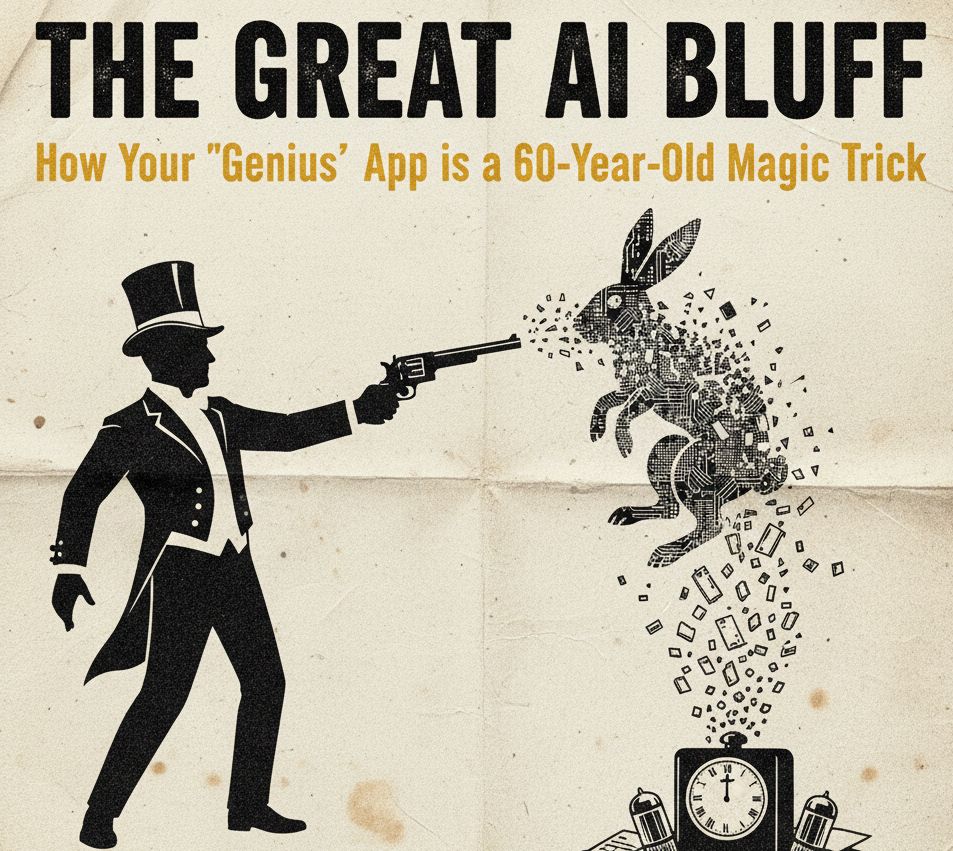
From 1966 to Now: The 60-Year Shell Game of Artificial Intelligence
The tech giants want you to believe AI was invented in a Palo Alto garage last Tuesday. They’re selling a miracle—the idea that they’ve finally cracked the code on human thought. But the receipts tell a different story.
What we’re seeing today isn’t a revolution; it’s a repackaging. The “AI Boom” is mostly a collection of expensive masks—flashy interfaces that rent their brains from a few Big Tech masters and sell them back to you at a markup. If you want to know why the “AI Revolution” feels like a hollow hustle, you have to look at the ghosts of the 1960s.
THE ELIZA EFFECT: FOOLING US SINCE 1966

In 1966—decades before the smartphone—an MIT professor named Joseph Weizenbaum created ELIZA. It was a simple script that mimicked a psychotherapist. It didn’t “think.” It just looked for keywords and flipped them back at the user.
Human: “I’m feeling sad today.”
ELIZA: “I am sorry to hear you are sad. Tell me more about your family.”
Weizenbaum was horrified to find that his secretary, and many others, began sharing their deepest secrets with the machine. They knew it was a code, but they felt it was alive. This is the ELIZA Effect: our human tendency to project a soul into a string of symbols. Today’s AI “products” aren’t smarter; they’re just better at the same 60-year-old magic trick.
THE FORGOTTEN PROOF
If you think AI is a modern miracle, look at the timeline the industry hopes you’ve forgotten:
1958: John McCarthy creates LISP, the programming language that still underpins AI research today.
1958: Frank Rosenblatt unveils the Perceptron. It was the first “neural network” that could learn from examples. The New York Times reported it would soon “walk, talk, see, write, and reproduce itself.” Sound familiar?
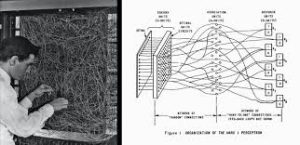
Frank and Perception
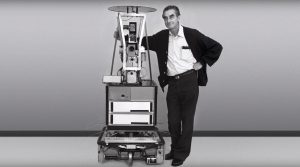
1966: Shakey the Robot at SRI becomes the first mobile agent to reason about its own actions. It could navigate a room and solve problems without a human holding its hand.
1990s: Your email spam filter was already using machine learning to protect your inbox.
AI hasn’t been “invented”—it’s been unlocked by massive computing power and even more massive data theft.
THE WRAPPER ECONOMY
Most “AI Startups” today are just Digital Parasites. They don’t own the model; they rent it. They sit on top of OpenAI or Google’s API, add a “sleek” dashboard, and call it a “revolutionary workflow tool.”
The Dependency Trap: If the Big Tech provider changes their terms, the startup dies.
The Accountability Gap: When the AI lies to you (hallucinates), the startup blames the model. When the price jumps, they blame the provider.
The Fragility: Your “intelligence” is a 2,000-mile handshake away. If the server in Virginia blinks, your business logic vanishes.
THE MOOGLETECHNOLOGY SHIFT: NO MORE RENTED BRAINS
At MOOGLETECHNOLOGY, we aren’t interested in being another layer of plastic on someone else’s machine. We build downward, not outward.
Most AI tools today are just high-tech hostages. If the internet drops or a server in Silicon Valley blinks, your “smart” app turns into a paperweight. We think that’s garbage engineering. We build for the moments when the world goes quiet..
We treat AI as the plumbing, not the parade. We assume the “intelligence” will fail eventually, so we build our systems to stay standing when it does.
The chapter of shallow AI wrappers is closing. The era of actually owning your tools is here.
MOOGLETECHNOLOGY Building systems first—intelligence second.
willaims
well said and written I completely agreed